
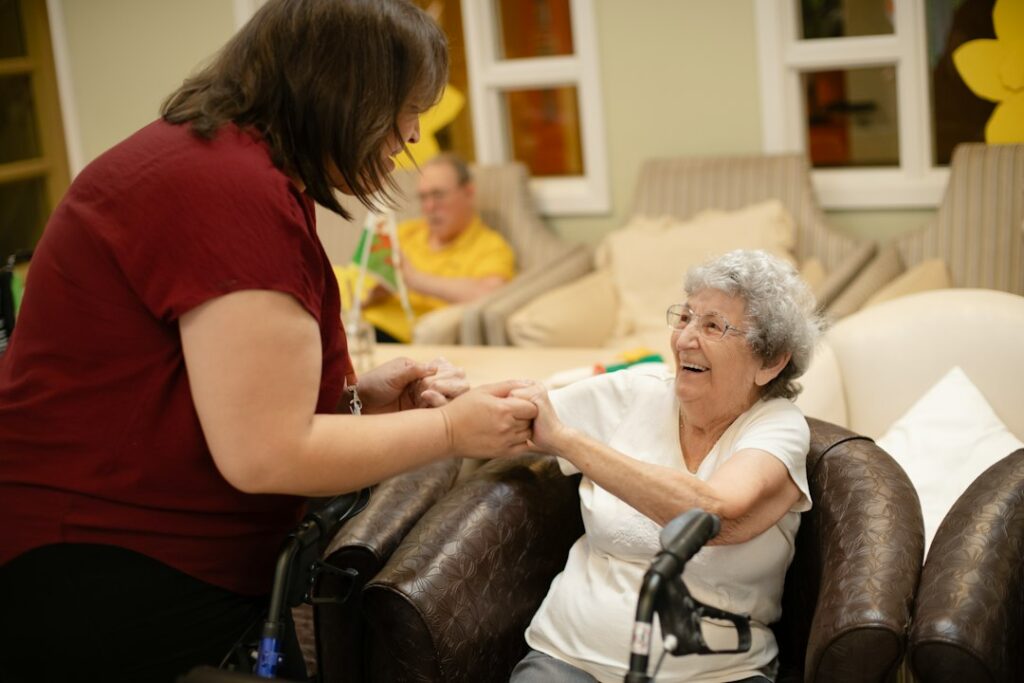
What does assisted living staff actually do?
Assisted living staff help residents remain as independent as possible while providing support with daily routines, health needs, safety, and social connection. The level of help can range from occasional reminders to hands-on assistance with several activities each day.
Staff roles usually include:
- Helping with bathing, dressing, grooming, and toileting
- Supporting mobility, transfers, and safe use of walkers or wheelchairs
- Providing medication reminders or medication management, depending on state rules and facility policy
- Serving meals and accommodating documented dietary needs
- Monitoring changes in mood, appetite, sleep, strength, or behavior
- Responding to urgent needs and arranging additional medical attention when necessary
- Organizing activities, transportation arrangements, and opportunities for social interaction
- Communicating with family members, healthcare professionals, and other members of a resident’s care team
Assisted living is not the same as a hospital or nursing home. Many residents do not need continuous medical care, but they may need reliable help with everyday tasks and a living environment that reduces avoidable risks.
How is a resident’s care arranged?
Support generally begins with an assessment of the resident’s abilities, preferences, health conditions, medications, and daily habits. Staff use this information to create a service plan or care plan that describes what assistance is needed and how it should be provided.
A care plan may address:
- The amount of help needed for personal care
- Whether a resident can walk independently or needs mobility support
- Medication routines and health monitoring
- Food preferences, allergies, and swallowing concerns
- Sleep patterns and nighttime needs
- Communication preferences
- Interests, routines, and cultural or personal habits
- What to do if the resident falls, becomes confused, or experiences a health change
The plan should not be treated as permanent. A resident who recovers strength after an illness may need less help, while someone experiencing memory loss or a new medical condition may need more. Families can ask how often care plans are reviewed and how changes are documented.
How do staff help with personal care while protecting privacy?
Personal care assistance is intended to provide practical help without taking away a resident’s dignity. Staff may assist with showers, clothing, oral hygiene, hair care, continence needs, and other private tasks.
Good support is usually based on three principles:
1. Explain the task before beginning. Residents should understand what help is being offered.
2. Encourage the resident to do what they safely can. Staff may set out clothing or provide balance support rather than completing every task automatically.
3. Respect privacy and preferences. Doors, curtains, towels, and appropriate communication help protect modesty.
A resident may prefer a particular time for bathing, certain clothing arrangements, or a specific way of organizing personal items. Sharing these preferences can make care more comfortable and more consistent.
How do staff support medications and health needs?
Medication support varies. Some residents only need reminders to take independently managed medications. Others may need staff to store, administer, or track medications under applicable rules and facility procedures.
Staff may also monitor issues such as:
- Dizziness or unusual weakness
- Changes in blood pressure or blood sugar when monitoring is part of the care plan
- New pain, swelling, shortness of breath, or confusion
- Missed medications or possible side effects
- Reduced appetite, dehydration, or difficulty swallowing
Staff members do not replace a resident’s physician, pharmacist, or other licensed healthcare professional. Their role is often to observe, document, follow established instructions, and report concerns promptly.
Residents and families should ask who is responsible for medication administration, what happens after a hospital visit, and how prescription changes are communicated.
What happens if a resident falls or has a sudden change?
Assisted living staff are trained to respond to emergencies according to established procedures. A response may include checking for immediate danger, calling emergency services when needed, providing appropriate first aid, notifying supervisors and family contacts, and documenting what occurred.
A fall does not always result in visible injury. Staff may watch for later signs such as pain, confusion, difficulty walking, unusual sleepiness, or reduced appetite. A sudden change in behavior can also signal infection, medication problems, dehydration, or another health concern.
Emergency plans should account for severe weather, power outages, building evacuation, and transportation disruptions. In Avoca, PA, seasonal cold, snow, ice, and changing road conditions can affect travel and family visits, so households may want to understand how staff manage winter safety and communication during difficult weather.
How do staff support memory loss or confusion?
Residents with memory changes may need predictable routines, simple explanations, and calm redirection. Staff can help by using familiar schedules, labeling personal items, reducing unnecessary clutter, and watching for triggers that increase anxiety.
Support may include:
- Offering one instruction at a time
- Allowing extra time for responses
- Redirecting rather than arguing about a mistaken belief
- Checking whether hunger, pain, fatigue, or overstimulation is contributing to distress
- Encouraging familiar activities and safe movement
- Recording patterns that should be discussed with the care team

Memory support is not limited to remembering names or appointments. Staff also help residents make everyday choices, recognize safety concerns, and maintain familiar habits.
How do staff encourage independence and social connection?
Assisted living staff support more than physical needs. They also help residents continue meaningful routines and relationships.
A resident may be encouraged to:
- Choose meals or clothing
- Help arrange personal belongings
- Attend an activity or spend time outdoors
- Participate in light household tasks when safe
- Call relatives or write messages
- Continue hobbies adapted to current abilities
- Make decisions about daily schedules
Activities may include exercise, music, games, crafts, educational discussions, religious observance, or informal conversation. Participation should be encouraged but not forced. Quiet time and individual preferences deserve respect as well.
What can families reasonably expect from staff communication?
Families should expect clear communication about significant changes, incidents, medication concerns, hospital visits, and changes in care needs. Routine communication may occur through scheduled updates, care meetings, written records, or designated family contacts.
It is reasonable to ask:
- Who should be contacted with questions?
- How quickly are urgent concerns reported?
- How are non-urgent changes communicated?
- Can residents and families review the current care plan?
- How are disagreements about care handled?
- What is the process for reporting a concern or complaint?
Residents should also be included in conversations whenever possible. Family involvement is helpful, but the resident’s preferences, rights, and decision-making ability remain central.
What should residents watch for in daily care?
Helpful signs include staff who knock before entering, explain care, listen to preferences, respond to requests, and document changes accurately. Residents should be treated respectfully even when they need extensive assistance.
Concerns may include unexplained injuries, repeated missed medications, sudden unexplained weight loss, ignored call requests, poor hygiene, or staff refusing to explain a change in care. A pattern matters, although a single concern should still be taken seriously and documented.
Keeping notes with dates, times, symptoms, conversations, and follow-up can help families describe a problem clearly. Safety, neglect, abuse, and urgent medical concerns require prompt action through the appropriate emergency, regulatory, or protective channels.
The central purpose of assisted living support is not to take over every part of a resident’s life. It is to provide dependable assistance where needed while preserving choice, privacy, safety, and participation in everyday living.
